PERSONAL TRAINING BLOG
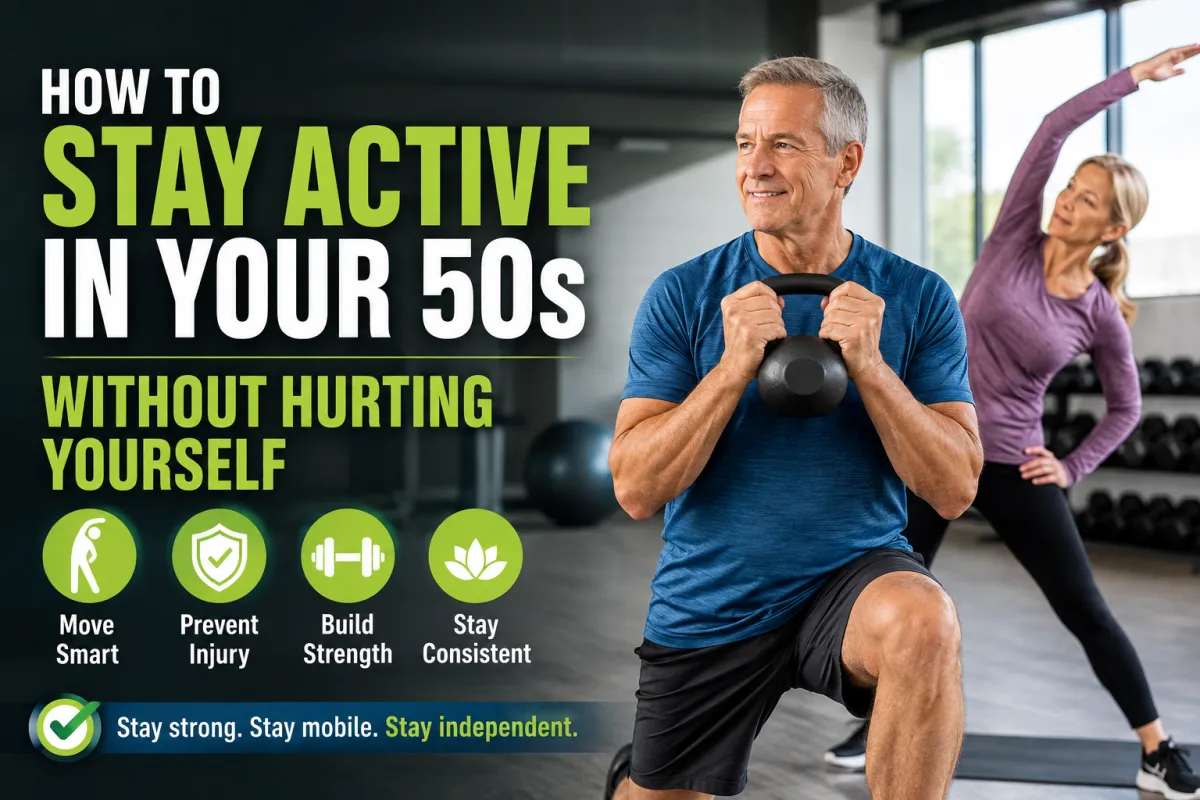
How to Stay Active in Your 50s Without Hurting Yourself
Staying active in your 50s is one of the best things you can do for your long-term health, but it's also when a lot of people get hurt trying to do it. A tweaked back from yard work. A sore knee after a run that used to feel easy. A shoulder that just never quite feels right after that one workout. If any of that sounds familiar, you're not alone, and you're not broken. Your body just needs a smarter approach than it did twenty years ago.
The good news is that fitness over 50 doesn't mean doing less. It means training with more intention, so you can keep doing the things you love for years to come.
Why Your 50s Call for a Different Approach to Exercise
In your 20s and 30s, your body tends to recover quickly and forgive poor form or overtraining. By your 50s, joints have more wear, muscle recovers more slowly, and old injuries have a way of resurfacing. That doesn't mean you need to slow down. It means the plan needs to account for how your body actually works now, not how it worked a decade ago.
The people who stay active longest aren't the ones who push the hardest. They're the ones who train with a plan built around their body's current needs, including mobility, joint health, and recovery, not just effort.
The Most Common Ways People Get Hurt Staying Active in Their 50s
Most injuries we see aren't from doing too much activity. They're from doing the wrong activity for what the body needs at that moment. A few patterns come up again and again:
Jumping back into high-impact workouts after months or years away
Ignoring nagging aches instead of addressing what's causing them
Skipping strength training and losing muscle that protects joints
Following a generic workout plan that doesn't account for old injuries or current limitations
None of these mean you should stop moving. They mean you need a plan that's built around your body, not a one-size-fits-all program.
Low-Impact Exercise for Adults That Still Builds Real Strength
Low-impact exercise for adults gets a bad reputation, as if it means going easy. In reality, low-impact training can build real strength and stability while putting far less stress on your joints. Think controlled strength training with proper form, resistance work, and mobility training, rather than high-impact running or jumping that pounds your knees and hips.
The goal isn't to avoid intensity. It's to apply it in a way your joints can handle, so you build strength instead of breaking your body down.
What Fitness Over 50 Should Actually Look Like
At Ultimate Wellness, we build every program around three connected pieces we call the Trinity System: Movement, Strength, and Recovery.
Movement: relearning how to move well, so everyday activities and workouts alike feel controlled and pain-free
Strength: building muscle and stability without unnecessary strain on your joints
Recovery: restoring mobility and staying ahead of stiffness before it turns into a bigger problem
This approach is what allows adults in their 50s and beyond to keep training hard without constantly getting sidelined by new aches and setbacks.
How Ultimate Wellness Helps You Stay Active Without the Guesswork
Most people try to solve pain or stiffness by doing more: more workouts, more stretching, more effort. But if you don't actually know what's causing the issue, you're still guessing. That's why we start every new client with a Longevity Assessment, which gives you a clear picture of how your body is functioning right now, so we can build a plan around what's actually holding you back instead of a generic template.
From there, your Longevity Plan is put into action through the Trinity System, guided by our coaches at our Havertown studio. We work with adults from Havertown, Drexel Hill, Broomall, and the surrounding Delaware County area who want a safer, more structured way to move, train, and stay active for the long haul.
Frequently Asked Questions
Is it too late to start strength training in your 50s?
No. Strength training in your 50s is one of the most effective ways to protect your joints, maintain muscle, and stay independent as you age. The key is starting with a plan that fits your current body, not jumping into a generic program.
What's the best low-impact exercise for someone in their 50s?
It depends on your goals and any current aches or old injuries. In general, a mix of guided strength training, mobility work, and controlled cardio tends to work better than high-impact activities alone.
How do I know if I'm training safely or making an old injury worse?
This is exactly what a Longevity Assessment is designed to answer. Instead of guessing, you get a clear picture of how your body is actually functioning so your plan can be built around it.
Ready to Stay Active in Your 50s Without the Setbacks?
You don't have to choose between staying active and staying pain-free. Start with a free 15-minute Health Strategy Session to find out whether a Longevity Assessment is the right next step for your body, and start building a plan that keeps you moving for the long run.
ARE YOU READY TO INVEST IN YOUR HEALTH AND HAVE A BLAST AT ULTIMATE WELLNESS?!?!
IF SO, CLICK THE LINK BELOW TO LEARN MORE
15 B SOUTH EAGLE ROAD, HAVERTOWN, PENNSYLVANIA 19083
15 B SOUTH EAGLE ROAD,
HAVERTOWN, PENNSYLVANIA 19083


© 2026 Ultimate Wellness
|
|
© 2026 Ultimate Wellness