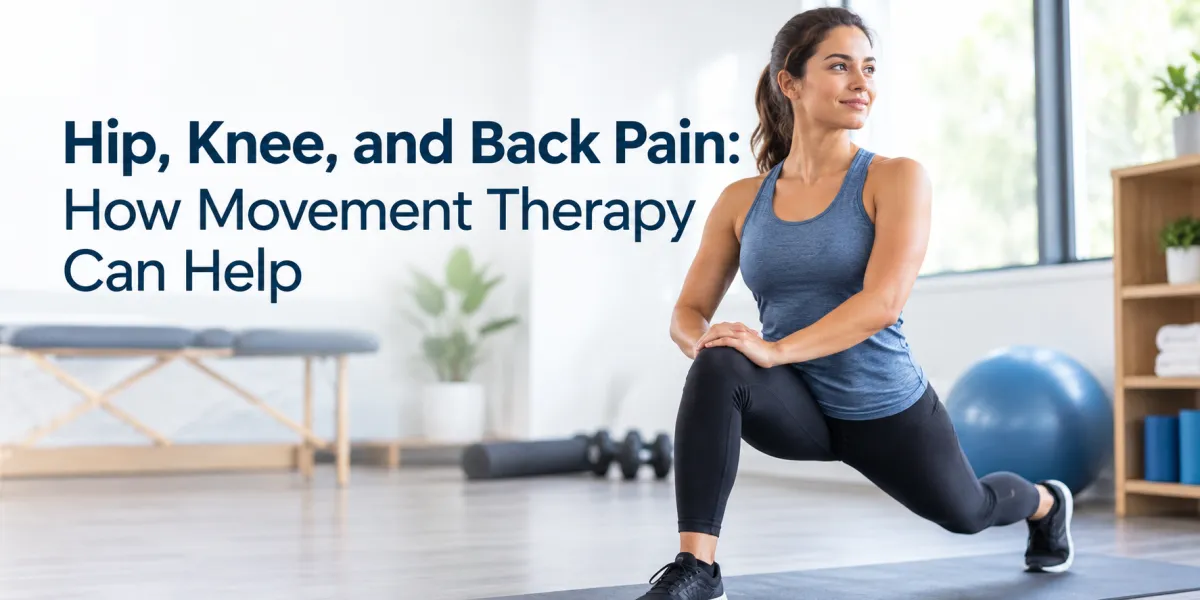
Hip, Knee, and Back Pain: How Movement Therapy Can Help
If you've ever woken up with a stiff back, struggled to climb stairs because of achy knees, or felt a dull ache in your hip after sitting all day, you're far from alone. Hip, knee, and back pain are among the most common complaints people bring to physical therapists, chiropractors, and wellness professionals. While rest and medication can offer short-term relief, they rarely address the root cause. That's where movement therapy comes in a proven, low-risk approach that helps the body heal itself through intentional, guided motion.
Why These Three Areas Are So Often Connected
Your hips, knees, and back don't work in isolation. They're part of a connected kinetic chain, meaning a problem in one area often creates compensations and eventually pain in another.
Tight hips can pull on the lower back, contributing to chronic lumbar pain.
Weak glutes force the knees to absorb more impact than they're built for, leading to knee strain.
Poor posture or core weakness shifts stress onto both the hips and the spine.
This is why a lasting fix rarely comes from treating just the painful spot. Movement therapy takes a whole-body approach, addressing the underlying imbalances that cause pain in the first place.
What Is Movement Therapy?
Movement therapy is a broad term for guided, therapeutic exercise designed to restore proper function, mobility, and strength. Unlike generic workouts, it's built around your specific pain patterns, posture, and movement limitations. Common approaches include:
Corrective exercise to retrain movement patterns and fix imbalances
Mobility and stretching routines to restore range of motion in stiff joints
Strength training to build support around vulnerable areas like the knees and lower back
Low-impact modalities such as Pilates, yoga therapy, or aquatic therapy for people who need gentler options
A qualified movement therapist or trainer assesses how you move not just where it hurts before building a plan around your needs.
How Movement Therapy Helps Hip Pain
Hip pain often stems from tightness in the hip flexors, weakness in the glutes, or years of prolonged sitting. Movement therapy typically focuses on:
Hip flexor stretches to release tension built up from sitting
Glute activation exercises like bridges and clamshells to restore stability
Controlled range-of-motion work to reduce stiffness without aggravating the joint
Over time, these exercises help redistribute load away from the hip joint itself and onto the muscles designed to support it.
How Movement Therapy Helps Knee Pain
Knee pain is frequently a symptom of problems happening above or below the joint weak hips, tight calves, or poor alignment. Rather than isolating the knee, movement therapy often targets:
Quad and hamstring strengthening to stabilize the joint
Hip strengthening to improve alignment and reduce excess strain on the knee
Balance and proprioception drills to support safer movement patterns
This approach is especially helpful for people dealing with everyday wear-and-tear knee pain, not just injury recovery.
How Movement Therapy Helps Back Pain
Back pain is one of the most common reasons people seek out movement-based treatment, and for good reason a strong, mobile core changes everything. Movement therapy for back pain often includes:
Core stabilization exercises that protect the spine during daily activities
Gentle spinal mobility work to reduce stiffness
Posture retraining to correct the habits that quietly contribute to chronic pain
Because back pain can have many different causes, a personalized assessment is especially important here.
Getting Started Safely
If you're dealing with hip, knee, or back pain, movement therapy offers a sustainable path toward relief but it works best when it's guided by a professional who can properly assess your specific situation. A trained eye can spot the compensations and imbalances you might not notice on your own, and build a plan that actually addresses them.
Pain doesn't have to be something you just live with. With the right movement-based approach, many people find they can reduce discomfort, regain mobility, and get back to doing the activities they love.
